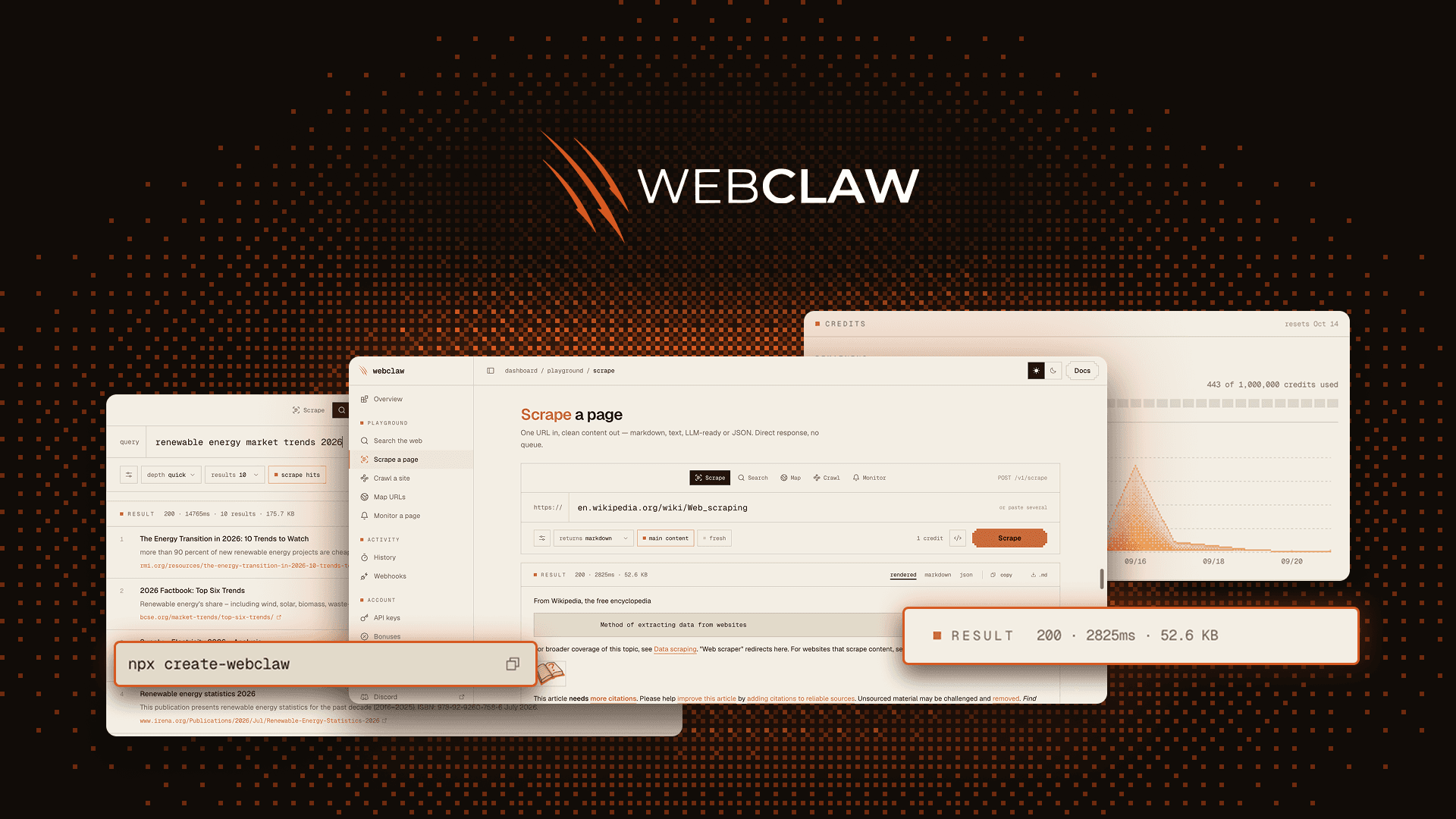
Webclaw offers a web extraction toolkit that converts web pages into structured data formats like Markdown and JSON, with an LLM-optimized mode. Its open-source core allows self-hosting, while a managed cloud API is available as a one-time purchase. Consider Webclaw if you need efficient, clean data for AI agents or custom applications.
Our Verdict on Webclaw
Webclaw is a strong contender for developers and AI practitioners needing structured web data, especially if token efficiency for LLMs is a priority. Its open-source nature provides flexibility for self-hosting, offering full control over data processing. However, if your primary need is a simple, no-code scraping solution without technical setup, you might find other tools more immediately accessible, as Webclaw's features lean towards integration with AI agents and custom development workflows.
Webclaw is Suited To These Needs
Developers and AI engineers who need clean, structured web data (Markdown, JSON) for training or feeding AI models, particularly with its LLM-optimized output.
Users who prefer an open-source solution for web scraping, allowing for self-hosting and full control over their data extraction infrastructure.
Projects requiring fast web content extraction, as Webclaw uses HTTP with TLS fingerprint impersonation for quick page returns, often under 200ms.
Key Strengths of Webclaw
LLM-Optimized Output: Webclaw offers a specific format that strips noise and reduces token count by approximately 90% compared to raw HTML, which is highly beneficial for efficient AI consumption.
Open-Source Flexibility: The core engine is open source under AGPL-3.0, enabling users to self-host the CLI, REST API server, or MCP server with Docker images and deploy scripts for complete control.
Multiple Output Formats: It supports six output formats including Markdown, JSON, HTML, plain text, and an LLM-optimized format, providing versatility for various data processing needs.
Consider These Tradeoffs
Technical Setup Required for Self-Hosting: While open-source offers control, self-hosting requires technical expertise to set up and maintain the infrastructure.
Managed Cloud API Specifics: The AppSumo deal is for a managed cloud API, so users should verify the exact usage limits and feature parity with the self-hosted version for their specific use case.
Focus on Structured Data for AI: Its primary strength is providing clean, structured data for AI agents, which might be overkill or less intuitive for simple, one-off scraping tasks.
Important Checks Before Buying Webclaw Cloud API Access
Check the specific terms and usage limits of the managed cloud API deal to ensure it aligns with your expected volume and frequency of data extraction.
If considering self-hosting, evaluate your team's technical capabilities for deploying and maintaining the open-source Webclaw engine.
Confirm compatibility with your existing AI clients (e.g., Claude, Cursor, Codex) if you plan to leverage the Model Context Protocol (MCP) server's 14 tools.
Understand the distinction between 'map' (sitemap discovery) and 'crawl' (page visitation and content extraction) to plan your data collection strategy effectively.
Review the data retention policy for the managed cloud API, noting that extracted content is not retained beyond serving the response, but LLM-based features send content to AI providers.
Questions about this find
What output formats does Webclaw support?
Webclaw supports six output formats: Markdown, JSON, HTML, plain text, an LLM-optimized format designed to strip noise and reduce token count, and raw HTML.
Can I self-host Webclaw?
Yes, Webclaw is open source under AGPL-3.0. You can self-host the CLI, REST API server, or MCP server on your own infrastructure, with Docker images and one-line deploy scripts available.
How does Webclaw handle data privacy?
Requests are processed in real time, and extracted content is not retained beyond what is needed to serve the response. If an LLM-based feature is used, page content is sent to the AI provider for processing. For full control, you can self-host the entire stack.
About this assessment
Our recommendation weighs the published details against likely buyer needs. It is based on source research, rather than personal testing. Confirm current pricing, availability and terms with the provider.
Read the current provider details.